
Written by Laiba Ali | Last updated: 29 October 2026
You send a text and then stare at your phone. Did that sound rude? Why haven’t they replied? By midnight, you’ve replayed it ten times.
If that feels familiar, nothing is wrong with you. Anxious thoughts can get loud fast. That’s where shadow work for anxiety comes in. Shadow work can help you notice what’s sitting behind your anxiety, like hidden feelings and pressure, but it is not a treatment.
This guide explains what it is, what research does and doesn’t say, how to try it safely, and when to ask for real support.
This article is educational only, not medical advice. I’m not a doctor, psychologist or therapist.
Table of Contents
Why does anxiety feel like it has no reason?
Anxiety is your body’s alarm system. It’s meant to protect you. Sometimes it goes off when there’s no real danger, like before a class presentation or while you scroll through everyone else’s highlight reel.
Often the reason isn’t missing. It’s just hidden. You might feel tense without realizing you’re worried about disappointing someone. That gap between what you feel and what you notice is where shadow work tries to help.
Everyday anxiety is common. Anxiety that sticks around and disrupts your life is a different matter, and we’ll cover that later.
What is shadow work, in simple words?
The idea comes from Carl Jung, a Swiss psychiatrist. He used “shadow” for the parts of ourselves we push away because they feel unacceptable, like anger, jealousy, neediness or fear.
Shadow work simply means getting curious about those parts instead of hiding them. In practice, that’s usually journaling and honest questions. For a fuller explanation, read our guide What Is Shadow Work?
How shadow work and anxiety connect
Nobody can point to one single cause of anxiety, so treat these links as ideas, not facts. Still, many people find them useful to think about.
Suppressed emotions and anxiety may be connected. When you keep swallowing anger or sadness, the feelings don’t always disappear. Some people notice them coming out as tension, restlessness or constant worry. Naming a feeling can make it feel less like a mystery.
Then there’s the pressure to be perfect. If you believe you must always seem fine, any slip feels scary. Guarding your image all day is tiring.
And there are the parts we hide. Imagine you hide your need for rest because everyone around you seems to be coping. The need doesn’t vanish. It may just return as dread on Sunday night.
Anxiety patterns shadow work may touch
Overthinking. Imagine a friend replies “ok” and you spend an hour decoding it. Shadow work and overthinking meet at one question: what am I afraid this means about me?

People-pleasing. Saying yes when you mean no can hide a fear of being disliked.
Fear of judgment. It shows up in class or work meetings, when you rehearse a comment so long that the moment passes. Social media comparison feeds it too.
Self-criticism. Imagine it’s exam season, you’re doing your best, and a voice still says you should be doing more.
Does shadow work help anxiety? What research says
Here’s the honest answer: direct research on shadow work for anxiety is limited. The idea comes from Jungian theory, and there are no strong studies showing it reduces anxiety. Anyone promising more is overselling.
What has some research support:
- Expressive writing, which means writing about your thoughts and feelings, has been studied for years. Some studies found small emotional benefits, but results are mixed.
- Mindfulness, noticing thoughts without judging them, has research behind it for easing anxiety symptoms in some people.
- Cognitive behavioral therapy (CBT) is a well-studied talking therapy for anxiety disorders, and health bodies like the NHS and NIMH describe it as a standard option.
What is popular but not proven:
- That shadow work “heals” anxiety or trauma
- That every anxious feeling comes from a hidden shadow part
- That digging deeper is always better
So what about shadow work vs therapy? Shadow work is a self-reflection habit. Therapy is guided by a trained person who can adjust to you. Journaling can sit beside therapy, but it shouldn’t replace it.
Before you start: a 2-minute safety check
Is shadow work safe for anxiety? For many people, light reflection is fine. But it can stir up strong feelings, so check in first. Ask yourself:
- Do I feel reasonably steady today?
- Do I have 15 quiet minutes in a private spot?
- Is there someone I could talk to if it gets heavy?
- Do I know I can stop whenever I want?

If you answered no to most, wait a day.
Who shadow work is not for (right now): anyone in crisis or having thoughts of self-harm, anyone dealing with a recent loss or trauma, and anyone whose symptoms feel unmanageable. Please talk to a professional first.
Trauma-informed shadow work means going slowly, choosing your own pace, and skipping anything that feels too much. For past trauma, don’t go it alone.
How to start shadow work for anxiety
Keep it small. Use a notebook or notes app and set a 10-minute timer. Answer one prompt, then stop when the timer ends, even mid-thought.
Try this quick check-in first:
- What am I feeling right now?
- Where do I feel it in my body?
- What happened just before?
Two or three sessions a week is plenty. These shadow work exercises for anxiety work best when they’re short and kind.
14 gentle shadow work journal prompts for anxiety
Here are shadow work anxiety prompts grouped by pattern. Each has a reason it may help and a note on when to skip it.

For overthinking
- What am I afraid this situation says about me?
Why it helps: it moves attention from the event to the fear underneath.
Skip if: you’re already spiraling. Ground yourself first. - If my worry could talk, what is it trying to protect me from?
Why it helps: it treats worry as a clumsy protector, not an enemy.
Skip if: it feels like arguing with yourself. - What feeling am I avoiding by staying busy in my head?
Why it helps: overthinking can be a way to dodge a feeling.
Skip if: you feel numb or flooded. - What do I know for sure right now, and what am I guessing?
Why it helps: it separates facts from stories.
Skip if: you feel too tired to think clearly.
For social anxiety
These shadow work for social anxiety prompts are about noticing, not fixing.
- When I rehearse what to say, whose reaction am I picturing?
Why it helps: it shows who you’re trying to impress.
Skip if: the person you picture has hurt you badly. - What would I say if I weren’t worried about being judged?
Why it helps: it points to what you may be holding back.
Skip if: it makes you feel worse about yourself. - What part of me do I hide around others, and what is it afraid of?
Why it helps: it names the fear behind the hiding.
Skip if: you’re feeling very low today.
For the inner critic
This set is shadow work for inner critic voices.
- What does my inner critic say most, and whose voice does it sound like?
Why it helps: criticism often echoes voices we’ve absorbed.
Skip if: that voice is linked to painful memories. Take it to a professional. - What would I say to a friend who made this same mistake?
Why it helps: it shows the gap between how you treat others and yourself.
Skip if: you can’t think of anything kind yet. That’s okay. - What is my inner critic trying to prevent?
Why it helps: it often turns out to be a fear of failing or being rejected.
Skip if: you’re in the middle of an exam rush. - What did I do well this week that I tend to skip over?
Why it helps: it balances a mind that notices only the negatives.
Skip if: it feels fake. Try again another day.
For people-pleasing
- When did I last say yes while wanting to say no?
Why it helps: it makes the habit visible.
Skip if: the memory feels painful. - What do I fear would happen if I disappointed someone?
Why it helps: it reveals the fear behind the yes.
Skip if: it involves unsafe people. Get support. - What do I need right now that I haven’t asked for?
Why it helps: it puts your needs back on the page.
Skip if: you feel emotionally empty today.
If it gets heavy: grounding and when to stop
When to stop shadow work: a racing heart, shaking, dizziness, panic, numbness or feeling flooded. Close the notebook. You can come back another day or not at all.
5-4-3-2-1 grounding: name 5 things you can see, 4 you can touch, 3 you can hear, 2 you can smell and 1 you can taste.
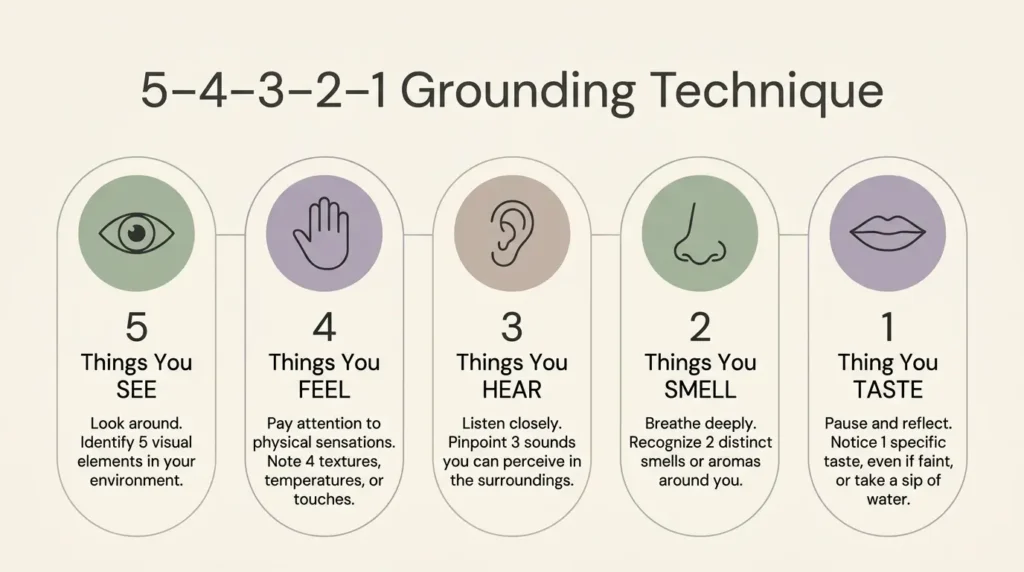
Slow breathing: breathe in through your nose for 4 counts, then out slowly for 6. Repeat a few times.
Then drink some water, step outside or text someone you trust.
When to get professional help
Anxiety comes in different forms, such as generalized anxiety (ongoing worry about many things), social anxiety (intense fear of being judged), panic disorder (sudden waves of fear with physical symptoms) and phobias. Only a qualified professional can say what’s going on, so please don’t use this list to diagnose yourself.
Consider reaching out if you notice:
- Worry most days for several weeks
- Trouble sleeping or concentrating
- A racing heart, shaking or stomach trouble
- Panic attacks
- Avoiding classes, work or friends
- Feeling hopeless
Help is available:
- US: call or text 988, the 988 Suicide and Crisis Lifeline
- Canada: call or text 9-8-8, the Suicide Crisis Helpline
- UK: NHS 111 for urgent advice, your GP, or NHS Talking Therapies, and Samaritans on 116 123
You don’t have to wait until things feel “bad enough.”
Shadow work mistakes to avoid
Going too deep too fast. Start with everyday worries, not your hardest memories.
Blaming yourself. Finding a hidden pattern doesn’t mean you caused your anxiety.
Opening trauma alone. Heavy memories deserve professional support.
Treating it like homework. Skip days when you’re drained. Rest counts.
Conclusion
Shadow work for anxiety isn’t a quick fix, and it doesn’t need to be. At its best, it’s a quiet way to listen to what your worries are trying to say. Go slowly, be kind to yourself, and keep real support close. Your next step is small: pick one prompt from this list, set a 10-minute timer, and see how you feel afterward.
This article is for education only. Read our medical disclaimer
FAQs
Can shadow work help with anxiety?
Shadow work may help some people understand their anxious thoughts and feelings better. It isn’t a proven treatment, and research directly on it is limited. Many people use it as gentle self-reflection alongside other support. If your anxiety affects daily life, a qualified professional can offer approaches with stronger evidence.
Can shadow work make anxiety worse?
Yes, it can for some people, especially if you go too deep too fast. Digging into painful feelings may leave you more tense or overwhelmed. Keep sessions short, use grounding tools, and stop if you feel worse. If it keeps happening, take a break and talk to a professional.
Is shadow work safe if I already have anxiety?
For many people, light journaling is reasonably safe, but it isn’t risk-free. Strong feelings can come up. Do the 2-minute safety check first, go slowly, and avoid heavy trauma topics on your own. If you’re in treatment, mention shadow work to your clinician first.
How do I start shadow work for anxiety?
Start small. Set a 10-minute timer, pick one gentle prompt, and write without editing. Check how you feel afterward. Begin with overthinking or inner critic prompts rather than painful memories. Two or three short sessions a week is plenty for a beginner.
What should I do if shadow work triggers me?
Stop writing and focus on the present. Try 5-4-3-2-1 grounding or slow breathing, drink some water, and move around. Reach out to someone you trust. If strong distress lasts or you feel unsafe, contact a professional or crisis line right away. Return only when you feel steady.
Is shadow work a replacement for therapy?
No. Shadow work is a self-reflection habit, while therapy is guided by a trained professional who can tailor support to you. Journaling can sit beside therapy, and some therapists welcome it. If anxiety affects your sleep, studies, work or relationships, therapy is the safer starting point.
How often should I do shadow work journaling?
Two or three times a week for 10 to 15 minutes is a gentle pace for most beginners. There’s no prize for doing it daily. Take days off whenever you feel drained. Quality matters more than quantity, and your pace can change with your stress levels.
When should I stop and ask for professional help?
Stop if you feel panicky, numb, hopeless or unsafe. Ask for help if worry lasts for weeks, disturbs sleep or daily life, or you have panic attacks. If you’re thinking about harming yourself, contact a crisis line or emergency services right away. You don’t need to wait until it feels bad enough.
One Response